
Deep Plane Facelift in Nice

A deeper-layer facelift technique
for naturally rejuvenated results

A deep plane facelift is an advanced facelift technique that lifts the deep tissues of the face rather than the skin alone. The surgeon releases the supporting ligaments of the face and repositions the SMAS (superficial musculoaponeurotic system) and the overlying skin together as a single composite flap. The result is more natural, longer-lasting, and the skin carries no excessive tension.

Dr Philippe Kestemont, head and neck surgeon based at Clinique Saint George in Nice on the French Riviera, performs deep plane facelift surgery for patients seeking durable rejuvenation of the face and neck without a pulled or windswept appearance.

What is a deep plane facelift

A deep plane facelift is a facial rejuvenation surgery that repositions the deep structures of the face. Unlike a traditional facelift, which separates skin from SMAS and tightens each layer independently, the deep plane technique releases the face’s retaining ligaments (zygomatic, masseteric, and mandibulocutaneous ligaments) and lifts the skin and SMAS together as one unit.

The technique was popularized in the 1990s by American surgeon Sam Hamra and has been refined since. It demands an excellent command of the facial nerve anatomy and is now considered by many specialists worldwide as one of the techniques producing the most natural results.

Deep plane facelift vs traditional facelift, the key differences

Criterion Traditional facelift (SMAS) Deep plane facelift
Plane of dissection Under the skin, then under the SMAS separately Under the SMAS as a single composite plane
Skin tension Moderate to high Low, redistributed onto deep tissues
Effect on midface and cheeks Limited Pronounced
Result appearance Natural, sometimes slightly tight at the skin level Highly natural, expressions preserved
Result longevity 7 to 10 years on average 10 to 15 years on average
Surgery duration 3 to 4 hours 4 to 6 hours
Social downtime Around 2 weeks Around 2 to 3 weeks
Technical demand Standard High

Benefits of a deep plane facelift

Natural rejuvenation without a pulled look

Because traction is applied to the deep tissues, the skin falls back into place naturally and carries no tension. Facial expressions remain intact. The smile, the gaze, and overall facial mobility are preserved.

Powerful action on the midface

The deep plane facelift is particularly effective on the midface, meaning the cheek area, hollow tear troughs, and nasolabial folds. This is precisely the zone that traditional techniques struggle to address fully.

A result that lasts longer

By repositioning the deep structures rather than tightening the skin, the result holds up better over time. Most clinical studies report a longevity of 10 to 15 years, compared with 7 to 10 years for traditional techniques.

Comprehensive treatment of face and neck

A deep plane facelift can be combined with a neck lift to address the jawline, jowls, and neck simultaneously.
Am I a good candidate for a deep plane facelift
The deep plane facelift suits people who present
  • Moderate to marked sagging of the jawline and lower face
  • Volume loss over the cheeks
  • Visible jowls or early double chin
  • Pronounced nasolabial folds
  • A loose neck with or without platysmal bands
  • Good general health, with no condition contraindicating surgery
  • Realistic expectations about outcomes
The average patient is between 45 and 70 years old, but the indication depends more on individual aging than on biological age.
A preoperative consultation with Dr Kestemont allows him to assess whether this technique is the most suitable for your anatomy, or whether another approach (traditional cervicofacial lift, temporal lift, non-surgical treatment) would serve you better.

How the procedure is performed

Before surgery

One or two preoperative consultations are needed. Dr Kestemont analyzes your facial morphology, explains the technique in detail, and provides a written quote and an informed consent document. A blood test and an anesthesia consultation are required.

The surgery

The deep plane facelift is performed under general anesthesia at Clinique Saint George in Nice. Surgery takes 4 to 6 hours depending on the scope (face only, or face combined with neck).
The incisions follow the natural contours of the ear and continue into the hairline, with an additional small incision under the chin if a neck lift is included. The surgeon releases the retaining ligaments, lifts the SMAS and skin together as a single flap, and closes with fine sutures.

After surgery

One overnight stay is generally planned. A compression dressing is worn for 24 to 48 hours. Some swelling and bruising during the first days are normal and resolve gradually.
Period What to expect
Day 1 to 7 Rest at home, mild pain medication, dressings
Day 7 to 10 Suture removal, first follow-up
Week 2 to 3 Gradual return to social activities
Month 1 to 3 Residual swelling fades, normal sensation returns
Month 6 Near-final result
Month 12 Final result
How much does a deep plane facelift cost in France

The cost of a deep plane facelift depends on the scope of the procedure (face only, face and neck, combined with eyelid surgery), operating time, and clinic and anesthesia fees. A personalized quote is provided during the preoperative consultation, in accordance with French regulations.


This is an aesthetic procedure and is not reimbursed by French social security.
Why choose Dr Philippe Kestemont
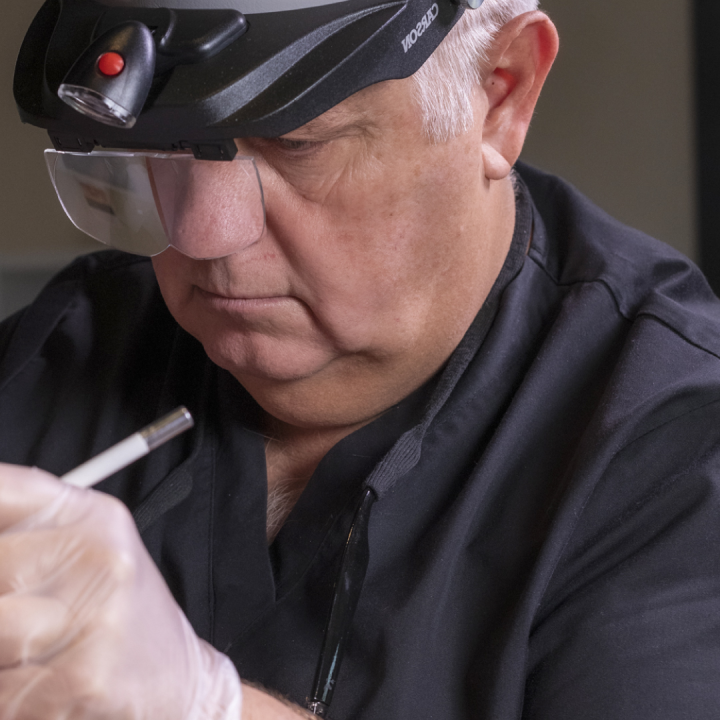
Dr Philippe Kestemont is a board-certified head and neck surgeon. He practices exclusively aesthetic and reconstructive surgery of the face and neck at Clinique Saint George in Nice. His qualifications in cervicofacial and ENT surgery give him an in-depth command of the facial nerve anatomy, an essential factor for the safety of the deep plane technique.
He regularly speaks at international congresses and publishes on facial surgery techniques.
Chirurgien de la Face et du Cou Nice Dr Kestemont

Frequently asked questions about deep plane facelift

Is a deep plane facelift painful
The procedure is performed under general anesthesia, so you feel nothing during surgery. In the first postoperative days, mild discomfort is controlled by simple painkillers. Most patients describe a sensation of tightness and numbness rather than true pain.
Most patients keep their result for 10 to 15 years. The face continues to age naturally, but from a younger starting point. Maintenance with non-surgical treatments such as botulinum toxin or hyaluronic acid extends the result.
A mini facelift mainly addresses the skin and SMAS in the lateral face. A deep plane facelift works deeper and across the whole face (midface, cheeks, jawline) and provides a more complete and longer-lasting outcome. A mini lift is suited to early sagging, while a deep plane lift addresses moderate to advanced sagging.
Incisions follow the natural contours of the ear and hide within the hairline. Scars are fine and become discreet once mature (6 to 12 months). They are usually invisible during normal conversation.
There is no fixed age. The indication is based on observed aging, not on the calendar. Most patients are between 45 and 70, but some opt for surgery earlier (from 40) when sagging appears prematurely.

Yes. A deep plane facelift is often combined with eyelid surgery (blepharoplasty), brow lift, or fat grafting to restore lost volume. Dr Kestemont will recommend the combination most suited to your case.

Most people can return to work between the 2nd and 3rd week. Strenuous exercise should be avoided for 4 to 6 weeks.
As with any surgical procedure, a deep plane facelift carries risks (hematoma, infection, temporary nerve weakness, delayed healing). When performed by a surgeon experienced in face and neck surgery, the procedure is safe. The risk of facial nerve injury is very low when the surgeon has a precise command of nerve anatomy.